This post contains affiliate links.
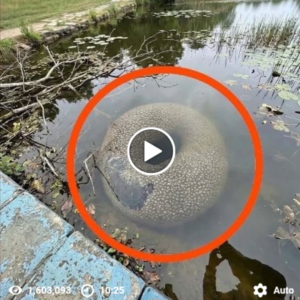
Why Our Brains Mistake Lake Debris for Dangerous Monsters
The human mind is a master of pattern recognition, a trait that helped our ancestors survive in the wild. However, this same instinct can lead to unsettling experiences in modern, peaceful settings. Recently, a quiet village was gripped by a collective sense of dread when a mysterious object was spotted floating in an artificial lake. What appeared to be a threatening entity from the depths turned out to be a simple piece of abandoned rubber. This incident serves as a fascinating case study in the psychology of fear and the phenomenon known as pareidolia.
The Lake Incident: A Study in Collective Anxiety
A routine afternoon walk through a local village took an unexpected turn when residents noticed a dark, unfamiliar shape drifting in the center of the lake. From a distance, the object appeared frightening and out of place. As a crowd gathered, the atmosphere grew heavy with tension. Without clear information, the void was filled with speculation. Some onlookers feared a dangerous trap, while others imagined a more disturbing creature hidden just beneath the surface.
This collective reaction is a classic example of how the “fear of the unknown” can escalate. Research suggests that when humans encounter ambiguous stimuli, our brains often default to a “threat-first” interpretation as a survival mechanism [1]. The stillness of the water and the lack of immediate answers allowed imagination to override logic, transforming a mundane object into a source of community-wide concern.
The Science of Pareidolia: Why We See What We Fear
The mystery was eventually solved by an elderly resident who recognized the “monster” for what it truly was: an old rubber inner tube. Abandoned for years, the tube had become heavily encrusted with moss and algae. This transformation made it unrecognizable from a distance, triggering a psychological phenomenon called pareidolia.
Pareidolia is the tendency for the brain to perceive meaningful images—often faces or living creatures—in random or ambiguous patterns. According to a 2022 study published in International Journal of Environmental Research and Public Health, pareidolia is particularly common in “built environments” where out-of-context stimuli can trigger intense emotional responses [2]. In this case, the mossy texture and organic movement of the floating tube were interpreted as the scales or limbs of a creature, a misperception fueled by the brain’s hypervigilance toward potential threats in water.
Environmental Impact: The Hidden Reality of Lake Debris
While the “monster” was debunked, the incident highlights a very real and less mystical threat: the environmental impact of abandoned rubber. The Environmental Protection Agency (EPA) has noted that tire wear particles and abandoned rubber products are significant contributors to microplastic pollution in waterways [3].
| Environmental Factor | Impact on Aquatic Ecosystems |
| Chemical Leaching | Rubber can release heavy metals and antioxidants into the water. |
| Microplastics | Breakdown of tires contributes to long-term pollution. |
| Habitat Alteration | Large debris can disrupt natural flow and sediment patterns. |
In artificial lakes, which often lack the natural filtration systems of larger bodies of water, such debris can persist for decades. The “moss and algae” that made the inner tube look so eerie were actually signs of the object becoming a substrate for biological growth, further integrating the pollutant into the local ecosystem.
Expert Insights: How to Navigate the Unknown
Psychologists emphasize that the best way to combat the fear of the unknown is through information and grounding. “The brain hates a vacuum,” says research into ambiguous threats. “When we don’t have facts, we invent stories to keep ourselves safe” [4]. To avoid the pitfalls of collective anxiety, experts recommend:
1.Objective Observation: Break down the visual components (color, movement, size) before assigning a label.
2.Contextual Analysis: Consider the most likely explanation (e.g., “is it more likely to be a prehistoric beast or a piece of trash?”).
3.Community Dialogue: Sharing observations can often lead to a more rational consensus, as seen when the elderly man provided the necessary context.
Conclusion
The mystery of the “lake monster” reminds us that our perceptions are often filtered through our fears. What began as a frightening encounter ended as a lesson in psychology and environmental awareness. By understanding the science of pareidolia and the reality of waterway pollution, we can turn moments of uncertainty into opportunities for learning. The next time you see something strange in the water, remember that the truth is often less about what is lurking beneath and more about how our brains are wired to see it.
FAQ Section
What is pareidolia?
Pareidolia is a psychological phenomenon where the brain perceives a specific, meaningful image (like a face or animal) in a random or ambiguous visual pattern.
Why do we fear unknown objects in water?
Humans have an evolutionary predisposition to be cautious around water, where visibility is limited and potential predators could be hidden. This is often referred to as “ambiguous threat” perception.
Are abandoned tires dangerous to lakes?
Yes, abandoned rubber can leach harmful chemicals and contribute to microplastic pollution, which negatively affects fish and plant life.
How can I identify a mysterious object safely?
Always maintain a safe distance. Use binoculars if available, and look for signs of mechanical or artificial origin, such as symmetrical shapes or synthetic materials.
SEO Metadata & Assets
- SEO Meta Title: Why Our Brains Mistake Lake Debris for Dangerous Monsters
- SEO Meta Description: Discover the psychology behind “lake monsters.” Learn how pareidolia and the fear of the unknown turn common lake debris into frightening mysteries.
- URL Slug: /psychology-of-lake-monsters-pareidolia/
- Focus Keyword: Lake Debris Monsters
- LSI Keywords: Pareidolia, ambiguous threat, collective anxiety, aquatic pollution, fear of the unknown, pattern recognition, lake mystery, rubber inner tube, environmental impact, microplastics.
References
- Medical News Today. “Fear of the Unknown: Definition and Causes.” medicalnewstoday.com
2. Wang, C., et al. (2022). “Pareidolia in a Built Environment as a Complex Phenomenological Ambiguous Stimuli.” International Journal of Environmental Research and Public Health. pmc.ncbi.nlm.nih.gov
3. Environmental Protection Agency (EPA). “Environmental and Health Impacts of Tires.” epa.gov
4. Psychology Today. “Study: Fear of the Unknown Compounds Many Anxiety Disorders.” psychologytoday.com
5. Frontiers in Environmental Science. “Tire and rubber particles in the environment.” frontiersin.org